
Insights · 6 min read
Water damage — what to do?
Around 1.1 million water-damage claims are filed with insurers in Germany every year — with total losses of more than 3 billion euros. When it happens to you, the first few minutes decide whether you're left with a damp spot or a gutted apartment. This guide walks through what to do step by step — and how to make sure it doesn't happen again.
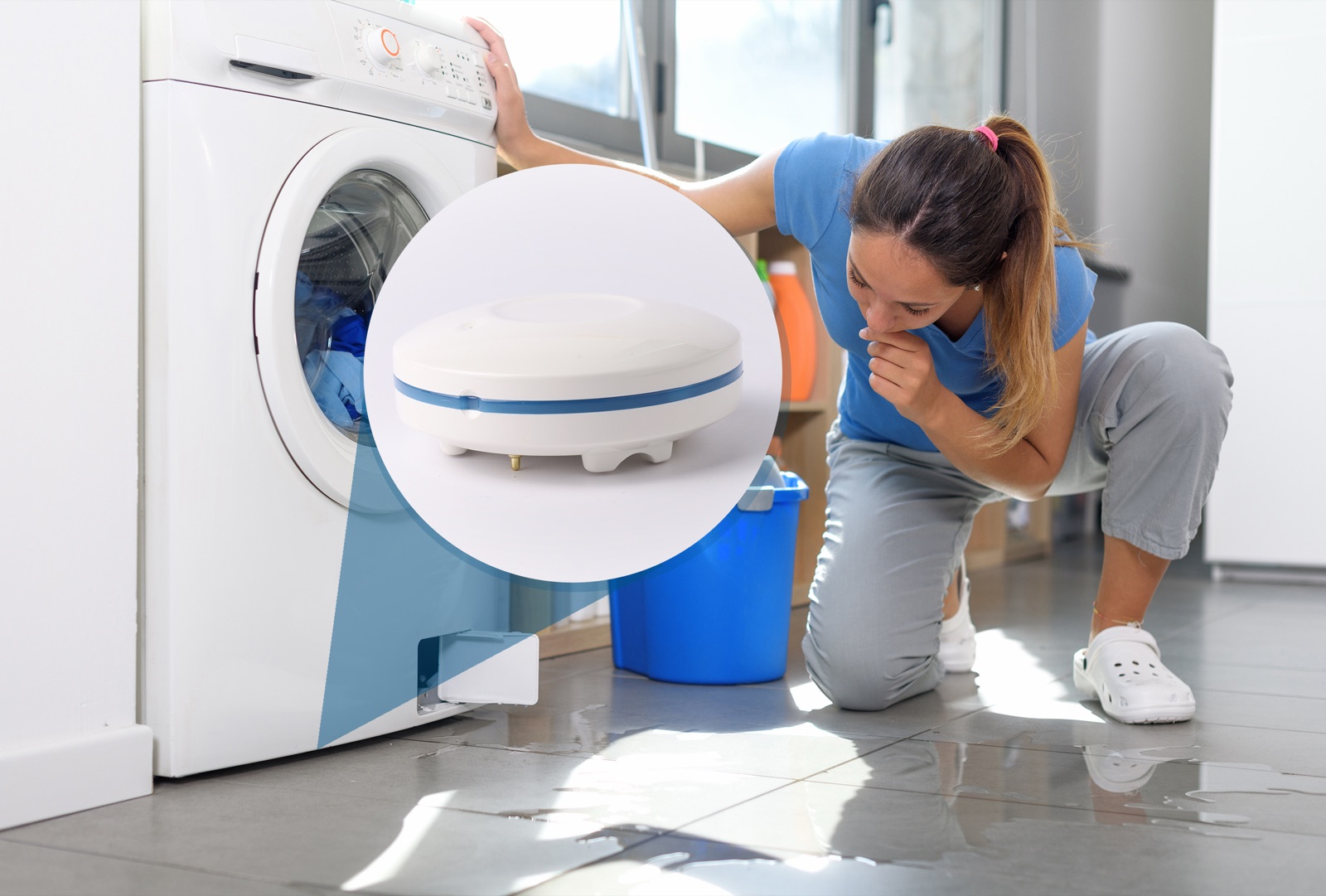
1. First: shut off the water
The single most important step is to stop the water flow. If a specific appliance is leaking (washing machine, dishwasher, toilet), the local shut-off valve right next to it is usually enough. If a pipe has burst or the source is unclear, close the main shut-off valve — typically in the basement, near the water meter. If you don't know where your main valve is: this is not the moment to find out. Walk your utility area once — before the emergency.
2. Cut the power in affected areas
Water and electricity are a dangerous mix. As soon as water could reach outlets, extension cords or appliances, switch off that circuit at the fuse box. For extensive flooding, kill the main breaker. Only then step into the flooded area.
3. Move valuables to safety
Lift furniture (blocks, foil, felt pads under the feet), roll up rugs and runners, move books and electronics off the floor and lower shelves. Pull curtains up. Leave drawers and doors open — wet wood swells and gets harder to move later.
4. Document the damage
Before you mop up water or move furniture: take photos and video. Date, time, affected rooms, water level, visibly damaged items. This documentation is the foundation for the insurance claim. Also write down who did what and when — reconstructing the sequence later is surprisingly hard.
5. Notify the insurer — the right one
Water damage in a home is typically covered by:
- Building insurance — for damage to the building itself (walls, floors, fitted kitchen, bathroom fixtures).
- Contents insurance — for movable belongings (furniture, electronics, clothing).
- Personal liability insurance — if your leak damaged neighbouring flats (rentals and condos).
Notify the insurer the same day if possible — by phone and in writing. Many policies require immediate notification, at the latest within 3 business days. Late notification can lead to reduced payouts. Ask explicitly whether an adjuster will visit — and whether you're allowed to start drying and repairs right away.
6. Remove water and dry — fast
Get visible water out with a wet vacuum, mop or buckets. Then the critical phase begins: mould can form within 24 to 48 hours if moisture isn't extracted. Opening windows and creating cross-ventilation is the cheap route — but for damage to screed floors, professional building dryers are usually unavoidable. Have walls and floors moisture-metered; a surface that feels dry isn't dry inside.
7. Identify the cause, document the repair
Was it a burst supply hose, a corroded pipe, a failed valve, cracked silicone sealant? The cause determines whether the insurer pays and who is liable. Have specialists (plumbers, restoration firms) produce written reports and photos. Keep every invoice.
The better path: prevent the damage
Nearly every water damage incident is preventable — not with better pipes, but with shutting the water off in time. That's exactly what Aqua-Scope does: flood sensors placed at the typical risk spots (washing machine, dishwasher, utility room, under the sink) detect escaping water within seconds and automatically close the main shut-off valve — before the screed gets wet. The Water Guard ball-valve motor mounts onto your existing ball valve without cutting any pipe and without a plumber. You get a push notification — and come home to a dry floor instead of a construction site.
Financially, a single prevented incident usually pays for the system. The average claim exceeds €3,100 — and that's just the insurance number, not the hassle, the construction time and the lost confidence in your own home.